



소개
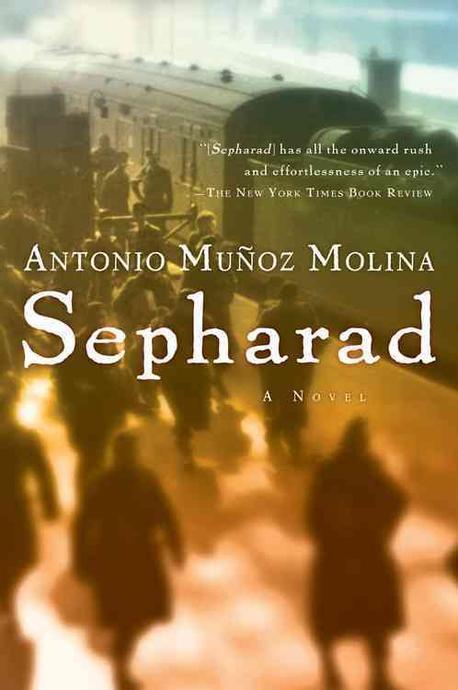
"Moving and astonishing." -- Richard Eder, The New York Times From one of Spain's most celebrated writerscomesan extraordinary book that draws on the Sephardic diaspora, the Holocaust, and Stalin's purges to tell a twentieth-century story. Shifting seamlessly from the past to the present and following the routes of escape across countries and continents, Antonio Munoz Molina evokes people real and imagined who come together in a richly allusive pattern--from Eugenia Ginzburg to Grete Buber-Neumann, the one on a train to the gulag, the other heading toward a Nazi concentration camp; from a shoemaker and a nun who become lovers in a small Spanish town to Primo Levi bound for Auschwitz. From the well known to the virtually unknown--all of Molina's characters are voices of separation, nostalgia, love, and endless waiting. "Shame and guilt, homelands and exile, ceaseless wanderings and bitter alienations both internal and external, metaphorical and real, are persistent motifs of Munoz Molina's remarkable novel--one that turns out to be about a territory far vaster than Sepharaditself: Europe, perhaps even the world . . . A masterpiece." -- Daniel Mendelsohn, The New York Review of Books "Munoz Molina writes the novels of the people he's met and imagined, gleaning from the names he encounters stories that vibrate beneath the burden of history, that lift with the breath of human life." - Los Angeles Times Book Review ANTONIO MUNOZ MOLINAhas twice been awarded the Premio Nacional de Literatura in Spain in addition to winning the Prix Femina in France. He lives in Madrid and New York. ANTONIO MUNOZ MOLINA has twice been awarded the Premio Nacional de Literatura in Spain in addition to winning the Prix Femina in France. He lives in Madrid and New York. Margaret Sayers Peden is an American translator and Professor,a Missouri native born in 1920.She returned to college to obtain her graduate degrees in later life. Her PhD is from the University of Missouri, where she remained as a Professor, teaching Spanish, Spanish American literature, and Translation and Interpretation at UMC for several decades. She is currently Professor Emeritus.One of the leading translators of her time, Peden has translated more than 40 books and has won numerous prizes and grants. She continues to reside in Columbia, Missouri. ANTONIO MUOZ MOLINA is the author of thirteen novels and has twice been awarded the Premio Nacional de Literatura (the Spanish equivalent of the National Book Award). He lives in Madrid. sacristan WE HAVE MADE OUR LIVES far away from our small city, but we just can't get used to being away from it, and we like to nurture our nostalgia when it has been a while since we've been back, so sometimes we exaggerate our accent when talking among ourselves, and use the common words and expressions that we've been storing up over the years and that our children can vaguely understand from having heard them so often. Godino, the secretary of our regional association-which has been rescued from its dismal lethargy thanks to his enthusiasm and dynamism-regularly organizes meals where we enjoy the food and recipes of our homeland, and if we are disgruntled that our gastronomy is as little known by foreigners as our monumental architecture or our Holy Week, we like having dishes that no one knows about, and giving them names that have meaning only to us. Oh, there's nothing like our gordal and cornezuelo olives! Godino exclaims, the plump ones and the long, pointed ones! Our rolls, our borrachuelos-we dream of those sugar-sprinkled pastries with a light touch of brandy-our layered pasta, our Easter cakes, our morcilla-our sausage has rice, not onion-our typical gazpacho, which is nothing at all like Andalusian gazpacho, and our wild-artichoke salad...In the private room of the Museo del Jamon, where those of us on the directors' council often meet, Godino gluttonously hacks off a piece of bread and before dipping it into the bowl of steaming morcilla makes a gesture like a benediction and recites these lines: Morcilla, blessed lady, worthy of our veneration. The owner of the Museo is a countryman of ours who, as Godino says, often personally oversees the catering of our feasts, in which there isn't a single ingredient that hasn't come from our city, not even the bread, which is baked in La Trini's oven, the very oven that to this day produces the mouthwatering madeleines and the Holy Week cakes with a hard-boiled egg in the center that we loved so much when we were kids. Now, to tell the truth, we realize that the oily dough sits a little heavy on our stomachs, and though in our conversations we keep praising the savor of those hornazos, which are absolutely unique in the world and no one but us knows the name of, if we start eating one, we quit before we're through, even though it's painful to waste food-something our mothers always taught us. We remember the early days in Madrid, when we used to go to the bus station to pick up a food package sent from home: cardboard boxes carefully sealed with tape and tightly tied with cord, bringing from across all that distance the undiluted aroma of the family kitchen, the delicious abundance of all the things we have missed and yearned for in Madrid: butifarros and chorizos, sausages from the recent butchering, borrachuelos sparkling with sugar, even a glass jar filled with boiled red pepper salad seasoned with olive oil, the greatest delicacy you can ask for in a lifetime. For a while the dim interior of the armoire in our boardinghouse room would take on the succulent and mysterious penumbra of those cupboards where we kept food in the days before the advent of refrigerators. (Now when I tell my children that back when I was their age there was no refrigerator or television in my house, they don't believe it, or worse yet, they look at me as if I were a caveman.) We had been away from our homes and our city for long, long months, but the smell and taste of them offered the same consolation as a letter, the same profound happiness and melancholy we felt after talking on the phone with our mothers or sweethearts. Our children, who spend the whole day glued to the telephone, talking for hours with someone they've seen only a short while before, can't believe that for us, not only in our childhood but our early teens as well, the telephone was still a novelty, at least in ordinary families, and because the system wasn't as yet automated From one of Spain's most celebrated writers, an extraordinary, inspired book--at once fiction, history, and memoir--that draws on the Sephardic diaspora, the Holocaust, and Stalin's purges to tell a twentieth-century story. Shifting seamlessly from the past to the present and following the routes of escape across countries and continents, Munoz Molina evokes people real and imagined who come together in a richly allusive pattern--from Eugenia Ginsburg to Grete Buber-Neumann, the one on a train to the gulag, the other heading toward a Nazi concentration camp; from a shoemaker and a nun who become lovers in a small Spanish town to Primo Levi bound for Auschwitz. From the well known to the virtually unknown--all of Molina's characters are voices of separation, nostalgia, love, and endless waiting. Written with clarity of vision and passion, in a style both lyrical and accessible, Sepharad makes the experience our own. A brilliant achievement. From one of Spain's most celebrated writers, an extraordinary, inspired bookat once fiction, history, and memoirthat draws on the Sephardic diaspora, the Holocaust, and Stalin's purges to tell a twentieth-century story. Shifting seamlessly from the past to the present and following the routes of escape across countries and continents, Munoz Molina evokes people real and imagined who come together in a richly allusive patternfrom Eugenia Ginsburg to Grete Buber-Neumann, the one on a train to the gulag, the other heading toward a Nazi concentration c& from a shoemaker and a nun who become lovers in a small Spanish town to Primo Levi bound for Auschwitz. From the well known to the virtually unknownall of Molina's characters are voices of separation, nostalgia, love, and endless waiting. Written with clarity of vision and passion, in a style both lyrical and accessible, Sepharad makes the experience our own. A brilliant achievement. PRAISE FOR SEPHARAD "Moving and often astonishing."--Richard Eder, The New York Times "An amazing book. The Margaret Sayers Peden translation is excellent. Read it."-- The Washington Post Book World PRAISE FORSEPHARAD "Moving and often astonishing."Richard Eder,The New York Times "An amazing book. The Margaret Sayers Peden translation is excellent. Read it."The Washington Post Book World Sacristan Copenhagen Those Who Wait Silencing Everything Valdem? Oh You, Who Knew So Well M?zenberg Olympia Berghof Cerb?e Wherever The Man Goes Scheherazade America You Are... Narva Tell Me Your Name Sepharad