

소개
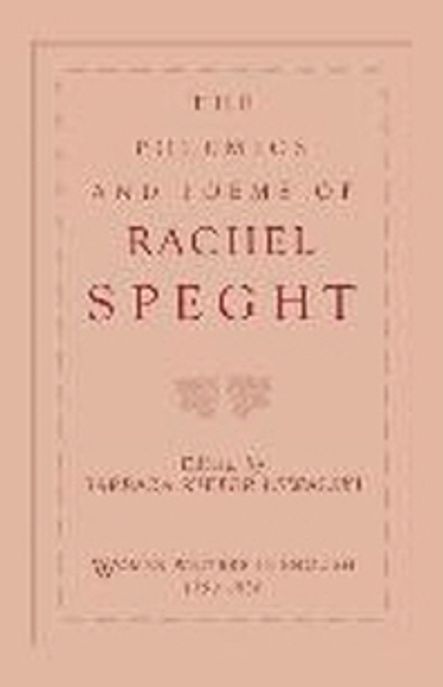
Barbara Lewalski is a Professor in the Departments of English and American Literature at Harvard University. Rachel Speght (1597?-?) is the first Englishwoman to identify herself, unapologetically and by name as a polemicist and critic of contemporary gender ideology. Her tract, A Mouzell for Melastomus (1617), is at once a spirited answer to Joseph Swetnam's very popular treatise attacking women (1617) and also a serious effort to stake women's claim to prevailing Protestant discourse of biblical exegesis, forcing it to yield a more expansive and more suitable concept of women's nature and role. Her volume of poetry, Mortalities Memorandum, with a Dreame Prefixed (1612), includes a long memento mori mediation and an allegorical dream vision that recounts her own rapturous encounter with learning. Both vigorously defend women's education and the encouragement of women's talent. "As is true in general of the editors in this series, Lewalski's edition of The Polemics and Poems of Rachel Speght is an informative and accessible text for both specialists and non-specialists. Her thoughtful commentary and notes open up the texts for scholars, providing insight intoSpeght's literary and social milieux and assistance with her vocabulary and sources. It is an important addition to the canon of pamphlets concerned with the formal controversy over woman in England during this period."--Seventeenth Century News "As is true in general of the editors in this series, Lewalski's editionof The Polemics and Poems of Rachel Speght is an informative and accessible textfor both specialists and non-specialists. Her thoughtful commentary and notesopen up the texts for scholars, providing insight into Speght's literary andsocial milieux and assistance with her vocabulary and sources. It is animportant addition to the canon of pamphlets concerned with the formalcontroversy over woman in England during this period."--Seventeenth CenturyNews "As is true in general of the editors in this series, Lewalski's edition of The Polemics and Poems of Rachel Speght is an informative and accessible text for both specialists and non-specialists. Her thoughtful commentary and notes open up the texts for scholars, providing insight intoSpeght's literary and social milieux and assistance with her vocabulary and sources. It is an important addition to the canon of pamphlets concerned with the formal controversy over woman in England during this period."--Seventeenth Century News "As is true in general of the editors in this series, Lewalski's edition of The Polemics and Poems of Rachel Speght is an informative and accessible text for both specialists and non-specialists. Her thoughtful commentary and notes open up the texts for scholars, providing insight into Speght's literary and social milieux and assistance with her vocabulary and sources. It is an important addition to the canon of pamphlets concerned with the formal controversy over woman in England during this period."-- Seventeenth Century News "Renaissance scholars and their students will welcome Barbara Lewalski's lucid introduction to Speght's works....Readers of Lewalski's earlier work will find the compressed rhetoric of the introduction compelling, appreciating the first appearance of this meticulously edited text. Her methodology is eclectic, drawing on formalist, generic, historical, and deconstructive terminology in the introductory material."-- Renaissance Quarterly "As is true in general of the editors in this series, Lewalski's edition ofThe Polemics and Poems of Rachel Speghtis an informative and accessible text for both specialists and non-specialists. Her thoughtful commentary and notes open up the texts for scholars, providing insight into Speght's literary and social milieux and assistance with her vocabulary and sources. It is an important addition to the canon of pamphlets concerned with the formal controversy over woman in England during this period."--Seventeenth Century News "Renaissance scholars and their students will welcome Barbara Lewalski's lucid introduction to Speght's works....Readers of Lewalski's earlier work will find the compressed rhetoric of the introduction compelling, appreciating the first appearance of this meticulously edited text. Her methodology is eclectic, drawing on formalist, generic, historical, and deconstructive terminology in the introductory material."--Renaissance Quarterly "Renaissance scholars and their students will welcome Barbara Lewalski's lucid introduction to Speght's works....Readers of Lewalski's earlier work will find the compressed rhetoric of the introduction compelling, appreciating the first appearance of this meticulously edited text. Hermethodology is eclectic, drawing on formalist, generic, historical, and deconstructive terminology in the introductory material."--Renaissance Quarterly "Renaissance scholars and their students will welcome Barbara Lewalski'slucid introduction to Speght's works....Readers of Lewalski's earlier work willfind the compressed rhetoric of the introduction compelling, appreciating thefirst appearance of this meticulously edited text. Her methodology is eclectic,drawing on formalist, generic, historical, and deconstructive terminology in theintroductory material."--Renaissance Quarterly "Renaissance scholars and their students will welcome Barbara Lewalski's lucid introduction to Speght's works....Readers of Lewalski's earlier work will find the compressed rhetoric of the introduction compelling, appreciating the first appearance of this meticulously edited text. Hermethodology is eclectic, drawing on formalist, generic, historical, and deconstructive terminology in the introductory material."--Renaissance Quarterly