

소개
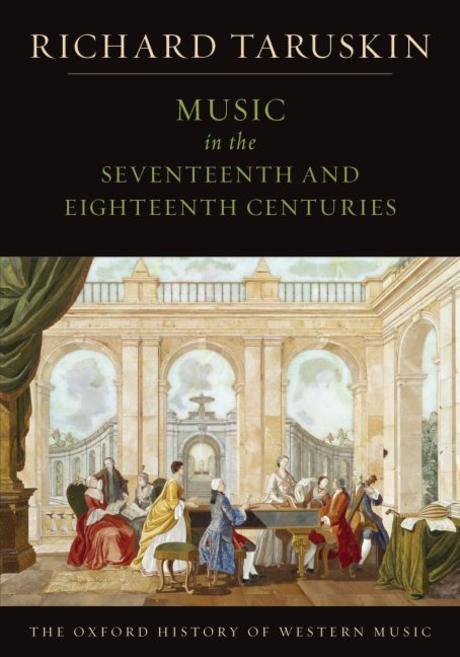
A survey of the traditions of western music by one of the most prominent and provocative musicologists of our time, this book illuminates, through a representative sampling of masterworks, those themes, styles, and currents that give shape and direction to each musical age. Richard Taruskin is Professor of Musicology at the University of California at Berkeley. Richard Taruskinis professor of musicology at the University of California, Berkeley. In addition to this work, Taruskin is also the author of such books asMusic in the Western World: A History in Documents (1985),Text & Act(OUP, 1995), andStravinsky and the Russian Traditions(1996). He is a frequent contributor to theNew York Times,New Republic,and many other scholarly journals. The Oxford History of Western Music is a magisterial survey of the traditions of Western music by one of the most prominent and provocative musicologists of our time. This text illuminates, through a representative sampling of masterworks, those themes, styles, and currents that give shape and direction to each musical age. Taking a critical perspective, this text sets the details of music, the chronological sweep of figures, works, and musical ideas, within the larger context of world affairs and cultural history. Written by an authoritative, opinionated, and controversial figure in musicology, The Oxford History of Western Music provides a critical aesthetic position with respect to individual works, a context in which each composition may be evaluated and remembered. Taruskin combines an emphasis onstructure and form with a discussion of relevant theoretical concepts in each age, to illustrate how the music itself works, and how contemporaries heard and understood it. It also describes how the context of each stylistic period-key cultural, historical, social, economic, and scientific events-influenced anddirected compositional choices. The universally acclaimed and award-winning Oxford History of Western Music is the eminent musicologist Richard Taruskin's provocative, erudite telling of the story of Western music from its earliest days to the present. Each book in this superlative five-volume set illuminates-through a representative sampling of masterworks-the themes, styles, and currents that give shape and direction to a significant period in the history of Western music. Music in the Seventeenth and Eighteenth Centuries , the second volume Richard Taruskin's monumental history, illuminates the explosion of musical creativity that occurred in the seventeenth and eighteenth centuries. Examining a wealth of topics, Taruskin looks at the elegant masques and consort music of Jacobean England, the Italian concerto style of Corelli and Vivaldi, and the progression from Baroque to Rococo to romantic style. Perhaps most important, he offers a fascinating account of the giants of this period: Bach, Handel, Mozart, Haydn, and Beethoven. Laced with brilliant observations, memorable musical analysis, and a panoramic sense of the interactions between history, culture, politics, art, literature, religion, and music, this book will be essential reading for anyone who wishes to understand this rich and diverse period. The universally acclaimed and award-winning Oxford History of Western Music is the eminent musicologist Richard Taruskin's provocative, erudite telling of the story of Western music from its earliest days to the present. Each book in this superlative five-volume set illuminates-through a representative sampling of masterworks-the themes, styles, and currents that give shape and direction to a significant period in the history of Western music. Now in paperback, each of the volumes is being sold separate for the first time. Music in the Seventeenth and Eighteenth Centuries, the second volume Richard Taruskin's monumental history, illuminates the explosion of musical creativity that occurred in the seventeenth and eighteenth centuries. Examining a wealth of topics, Taruskin looks at the elegant masques and consort music of Jacobean England, the Italian concerto style of Corelli and Vivaldi, and the progression from Baroque to Rococo to romantic style. Perhaps most important, he offers a fascinating account of the giants of this period: Bach, Handel, Mozart, Haydn, and Beethoven. Laced with brilliant observations, memorable musical analysis, and a panoramic sense of the interactions between history, culture, politics, art, literature, religion, and music, this book will be essential reading for anyone who wishes to understand this rich and diverse period. The universally acclaimed and award-winningOxford History of Western Musicis the eminent musicologist Richard Taruskin's provocative, erudite telling of the story of Western music from its earliest days to the present. Each book in this superlative five-volume set illuminates-through a representative sampling of masterworks-the themes, styles, and currents that give shape and direction to a significant period in the history of Western music. Now in paperback, each of the volumes is being sold separate for the first time. Music in the Seventeenth and Eighteenth Centuries, the second volume Richard Taruskin's monumental history, illuminates the explosion of musical creativity that occurred in the seventeenth and eighteenth centuries. Examining a wealth of topics, Taruskin looks at the elegant masques and consort music of Jacobean England, the Italian concerto style of Corelli and Vivaldi, and the progression from Baroque to Rococo to romantic style. Perhaps most important, he offers a fascinating account of the giants of this period: Bach, Handel, Mozart, Haydn, and Beethoven. Laced with brilliant observations, memorable musical analysis, and a panoramic sense of the interactions between history, culture, politics, art, literature, religion, and music, this book will be essential reading for anyone who wishes to understand this rich and diverse period. "Most of the news in classical music takes place on stage or on disc. But at the moment, one of the biggest stories (in more ways than one) is taking place on the printed page." --The New York Times "Erudite, engaging, and suffused throughout with a mixture of brilliance and delirium." --Washington Post "Readers will profit from his sharp analysis and unabashed opinions... Taruskin has succeeded in writing a stimulating overview of Western society, setting a standard that will not be surpassed for a very long time..." --Library Journal "Taruskin's chef-d'oeuvre, however, is a feast of contrarian ideas, with enough spice to sting the palate of anyone with a stake in telling the old stories in the old way. It aims for nothing less than the revaluation of practically everything you thought you knew about classical music....Taruskin's magnum opus is a must-read, and in its way, a real page-turner of detective non-fiction. It's a cinch to become the most discussed music title of the year, if not of the decade."-- The Globe & Mail "The book is nothing short of spectacular" - New Music Box "There's plenty to keep you amused and enlightened - it's very good reading." - American Record Guide "Rather than assemble an overview, Taruskin has written a critical, subjective history in which he examines the influence of key figures, works, and musical ideas against the backdrop of world affairs and cultural history."-Berkeleyan "Musicians, students, historians, and other readers wishing a detailed narrative about the career, patronage, musical influences, reception, and creative production of western composers, as well as the development of musical styles will find this a fascinating and satisfying resource." --Reference and Research Library Book News "Most of the news in classical music takes place on stage or on disc. But at the moment, one of the biggest stories (in more ways than one) is taking place on the printed page." --The New York Times "Erudite, engaging, and suffused throughout with a mixture of brilliance and delirium." --Washington Post "Readers will profit from his sharp analysis and unabashed opinions... Taruskin has succeeded in writing a stimulating overview of Western society, setting a standard that will not be surpassed for a very long time..." --Library Journal "Taruskin's chef-d'oeuvre, however, is a feast of contrarian ideas, with enough spice to sting the palate of anyone with a stake in telling the old stories in the old way. It aims for nothing less than the revaluation of practically everything you thought you knew about classical music....Taruskin's magnum opus is a must-read, and in its way, a real page-turner of detective non-fiction. It's a cinch to become the most discussed music title of the year, if not of the decade."--The Globe & Mail "The book is nothing short of spectacular" - New Music Box "There's plenty to keep you amused and enlightened - it's very good reading." - American Record Guide "Rather than assemble an overview, Taruskin has written a critical, subjective history in which he examines the influence of key figures, works, and musical ideas against the backdrop of world affairs and cultural history."-Berkeleyan "Musicians, students, historians, and other readers wishing a detailed narrative about the career, patronage, musical influences, reception, and creative production of western composers, as well as the development of musical styles will find this a fascinating and satisfying resource." --Reference and Research Library Book News Praise for Richard Taruskin's Oxford History of Western Music, 6-volume set "Most of the news in classical music takes place on stage or on disc. But at the moment, one of the biggest stories (in more ways than one) is taking place on the printed page." --The New York Times "Erudite, engaging, and suffused throughout with a mixture of brilliance and delirium." --Washington Post "Readers will profit from his sharp analysis and unabashed opinions... Taruskin has succeeded in writing a stimulating overview of Western society, setting a standard that will not be surpassed for a very long time..." --Library Journal "Taruskin's chef-d'oeuvre, however, is a feast of contrarian ideas, with enough spice to sting the palate of anyone with a stake in telling the old stories in the old way. It aims for nothing less than the revaluation of practically everything you thought you knew about classical music....Taruskin's magnum opus is a must-read, and in its way, a real page-turner of detective non-fiction. It's a cinch to become the most discussed music title of the year, if not of the decade."-- The Globe & Mail "The book is nothing short of spectacular" - New Music Box "There's plenty to keep you amused and enlightened - it's very good reading." - American Record Guide "Rather than assemble an overview, Taruskin has written a critical, subjective history in which he examines the influence of key figures, works, and musical ideas against the backdrop of world affairs and cultural history."-Berkeleyan "Musicians, students, historians, and other readers wishing a detailed narrative about the career, patronage, musical influences, reception, and creative production of western composers, as well as the development of musical styles will find this a fascinating and satisfying resource." --Reference and Research Library Book News 1. Opera from Monteverdi to MonteverdiPrincely and Public Theaters; Monteverdi's Contributions to Both2. Fat Times and LeanOrgan Music from Frescobaldi to Scheidt; Schutz's Career; Oratorio and Cantata3. Courts Resplendent, Overthrown, RestoredTragedie Lyrique from Lully to Rameau; English Music in the Seventeenth Century4. Class and ClassicismOpera Seria and Its Makers5. The Italian Concerto Style and the Rise of Tonality-Driven FormCorelli, Vivaldi, and Their German Imitators6. Class of 1865 (I)Careers of J.S. Bach and G.F. Handel Compared; Bach's Instrumental Music7. Class of 1865 (II)Handel's Operas and Oratorios; Bach's Cantatas and Passions; Domenico Scarlatti8. The Comic StyleMid-Eighteenth-Century Stylistic Change Traced to Its Sources in the 1720s; Empfindsamkeit; Galanterie; "War of the Buffoons"9. Enlightenment and ReformThe Operas of Piccinni, Gluck, and Mozart10. Instrumental Music Lifts OffThe Eighteenth-Century Symphony; Haydn11. The Composer's VoiceMozart's Piano Concertos; His Last Symphonies; the Fantasia as Style and as Metaphor12. The First RomanticsLate Eighteenth-century Music Esthetics; Beethoven's Career and His Posthumous Legend13. C-Minor MoodsThe "Struggle and Victory" Narrative and Its Relationship to Four C-Minor Works of BeethovenNotesBibliographyIndex