

소개
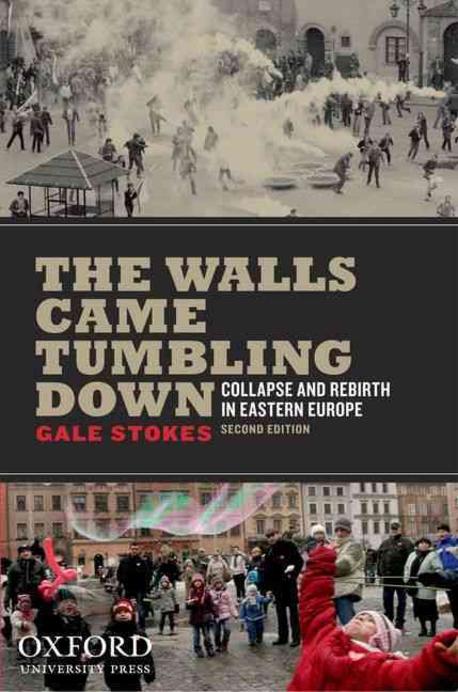
Gale Stokes is past Dean of Humanities, Chair of the History Department, and a three time winner of the George R. Brown Award for Superior Teaching at Rice University. He is the author of several books, including From Stalinism to Pluralism: A Documentor History of Eastern Europe Since 1945, Second Edition, (OUP, 1996) and Three Eras of Political Change in Eastern Europe (OUP, 1996). Beginning with the 1968 Soviet invasion of Czechoslovakia and culminatingin the 1989-1991 revolutions, The Walls Came Tumbling Down is a sweeping, vividnarrative of the gradual collapse of Eastern European communism. Focusing on thedecades of unrest that precipitated 1989's tumultuous events, and includinginformation obtained firsthand from personal interviews, Gale Stokes provides acomprehensive history of the various communist regimes and the oppositionmovements that brought them down, including the "March Days" and SolidarityMovement of Poland, the 1975 Helsinki accords, Czechoslovakia's Charter 77opposition movement, the autocratic policies of Romania's Nicolae Ceaucescu thatbrought his people to the point of violent outrage, and every other major eventthat marked the crumbling of communism. Stokes also examines the first totteringsteps in 1990-1991 toward pluralist government, from the resignation of MikhailGorbachev to the bloody partitioning of war-torn Yugoslavia. For courses incommunist studies or recent history, The Walls Came Tumbling Down is ideal formaking clear the most widespread and significant upheaval of the lattertwentieth century. Gale Stokes' The Walls Came Tumbling Down offered one of the most respected interpretations of the East European revolutions of 1989 for many years. It provides a sweeping yet vivid narrative of the two decades of developments that led from the Prague Spring of 1968 to the collapse ofcommunism in 1989. Highlights of that narrative include, among other things, discussions of Solidarity and civil society in Poland, Charter 77 and the Velvet Revolution in Czechoslovakia, and the bizarre regime of Romania's Nikolae Ceauescu and his violent downfall. In this second edition, now appropriately subtitled Collapse and Rebirth in Eastern Europe, Stokes not only has revised these portions of the book in the light of recent scholarship, but has added three new chapters covering the post-communist period, including analyses of the unification of Germanyand the collapse of the Soviet Union, narratives of the admission of many of the countries of the region to the European Union, and discussion of the unfortunate outcomes of the Wars of Yugoslav Succession in the Western Balkans. Gale Stokes' The Walls Came Tumbling Downoffered one of the most respected interpretations of the East European revolutions of 1989 for many years. It provides a sweeping yet vivid narrative of the two decades of developments that led from the Prague Spring of 1968 to the collapse of communism in 1989. Highlights of that narrative include, among other things, discussions of Solidarity and civil society in Poland, Charter 77 and the Velvet Revolution in Czechoslovakia, and the bizarre regime of Romania's Nikolae Ceauescu and his violent downfall. In this second edition, now appropriately subtitled Collapse and Rebirth in Eastern Europe, Stokes not only has revised these portions of the book in the light of recent scholarship, but has added three new chapters covering the post-communist period, including analyses of the unification of Germany and the collapse of the Soviet Union, narratives of the admission of many of the countries of the region to the European Union, and discussion of the unfortunate outcomes of the Wars of Yugoslav Succession in the Western Balkans. "The book strikes a very nice balance between interpretation and narration, never getting too bogged down in a detailed explanation of political developments nor getting lost in overly nuanced analysis."--Brian Porter-Szucs, The University of Michigan "Engaging and insightful both in its review of the past and its predictions for the future of post-communist Eastern Europe. I was impressed by the creative organization of the book. Stokes is magnificent in presenting the complexity of regional developments and is careful to avoid generalizations across borders and parties."--Irina Gigova, College of Charleston "This is an excellent book and I have been assigning it for more than a decade. The writing is very good. It is clear, engaging, and at a level that my students can follow without difficulty."--T. Mills Kelly, George Mason University