



소개
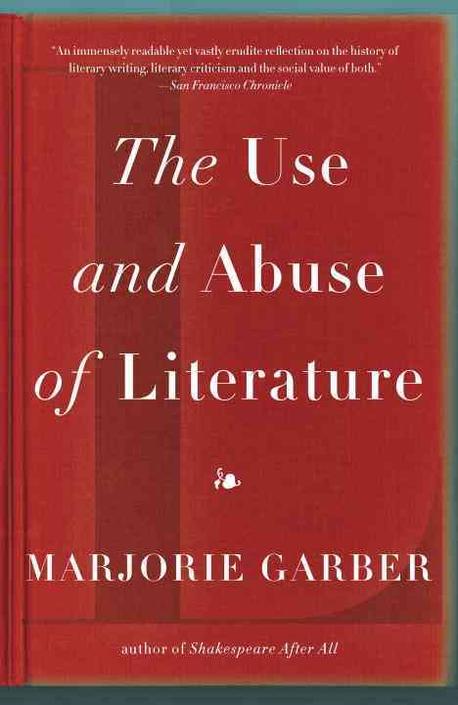
Marjorie Garber is the William R. Kenan, Jr., Professor of English and of Visual and Environmental Studies at Harvard University, and chair of the Program in Dramatic Arts. She has served as director of the Humanities Center at Harvard, chair of the department of Visual and Environmental Studies, and director of the Carpenter Center for the Visual Arts. A member of the Board of Directors of the American Council of Learned Societies and a trustee of the English Institute, she is the former president of the Consortium of Humanities Centers and Institutes, and a continuing member of its board. She is the author of sixteen books and has edited seven collections of essays on topics from Shakespeare to literary and cultural theory to the arts and intellectual life, including Shakespeare After All, which was acclaimed as one of Newsweekrs"s ten best nonfiction books of 2004 and received the 2005 Christian Gauss Award from the Phi Beta Kappa Society. From the Hardcover edition. As defining as Christopher Lasch's The Culture of Narcissism,Allan Bloom's The Closing of the American Mind,and Dinesh D'Souza's Illiberal Educationwere to the 1970s, 1980s, and 1990s, respectively, Marjorie Garber's The Use and Abuse of Literatureis to our times. Even as the decline of the reading of literature, as argued by the National Endowment for the Arts, proceeds in our culture, Garber ("One of the most powerful women in the academic world"- The New York Times) gives us a deep and engaging meditation on the usefulness and uselessness of literature in the digital age. What is literature, anyway? How has it been understood over time, and what is its relevance for us today? Who are its gatekeepers? Is its canonicity fixed? Why has literature been on the defensive since Plato? Does it have any use at all, or does it merely serve as an aristocratic or bourgeois accoutrement attesting to worldly sophistication and refinement of spirit? Is it, as most of us assume, good to read literature, much less study it-and what does either mean? The Use and Abuse of Literatureis a tour de force about our culture in crisis that is extraordinary for its brio, panache, and erudition (and appreciation of popular culture) lightly carried. Garber's winning aim is to reclaim literature from the margins of our personal, educational, and professional lives and restore it to the center, as a fierce, radical way of thinking. From the Hardcover edition. As defining as Christopher Lasch?? The Culture of Narcissism,Allan Bloom?? The Closing of the American Mind,and Dinesh D??ouza?? Illiberal Educationwere to the 1970s, 1980s, and 1990s, respectively, Marjorie Garber?? The Use and Abuse of Literatureis to our times. Even as the decline of the reading of literature, as argued by the National Endowment for the Arts, proceeds in our culture, Garber (??ne of the most powerful women in the academic world?? The New York Times) gives us a deep and engaging meditation on the usefulness and uselessness of literature in the digital age. What is literature, anyway? How has it been understood over time, and what is its relevance for us today? Who are its gatekeepers? Is its canonicity fixed? Why has literature been on the defensive since Plato? Does it have any use at all, or does it merely serve as an aristocratic or bourgeois accoutrement attesting to worldly sophistication and refinement of spirit? Is it, as most of us assume, good to read literature, much less study it-and what does either mean? The Use and Abuse of Literatureis a tour de force about our culture in crisis that is extraordinary for its brio, panache, and erudition (and appreciation of popular culture) lightly carried. Garber?? winning aim is to reclaim literature from the margins of our personal, educational, and professional lives and restore it to the center, as a fierce, radical way of thinking. From the Hardcover edition. In this deep and engaging meditation on the usefulness and uselessness of reading in the digital age, Harvard English professor Marjorie Garber aims to reclaim "literature" from the periphery of our personal, educational, and professional lives and restore it to the center, as a radical way of thinking. But what is literature anyway, how has it been understood over time, and what is its relevance for us today? Who gets to decide what the word means? Why has literature been on the defensive since Plato? Does it have any use at all, other than serving as bourgeois or aristocratic accoutrements attesting to one's worldly sophistication and refinement of spirit? What are the boundaries that separate it from its "commercial" instance and from other more mundane kinds of writing? Is it, as most of us assume, good to read, much less study-and what would that mean? In this deep, engaging mediation on the use and uselessness of reading in the digital age, Harvard English professor Marjorie Garber aims to reclaim "literature" from the periphery and restore it-as a radical way of thinking-to the center of our personal, educational, and professional lives. "An immensely readable yet vastly erudite reflection on the history of literary writing, literary criticism and the social value of both." - The San Francisco Chronicle "Erudite and stimulating. . . . Garber is warmly clarifying and acerbically entertaining as she convincingly defends the academic study of literature as an essential facet of culture. . . . A welcome, wise, and edifying call back to literature itself rather than the paper versus digital debate." - Booklist "Garber claims for literature a sort of stem cell-like power to generate fresh and new imaginative experiences in those who read it" - Associated Press "Garber seems to have read everything, and this book offers, in addition to seductive argument, a complete anthology of quotations and engagements with poets, playwrights, novelists, biographers and literary theorists. Her book is a testament not simply to Great Books but also to a great conversation between ourselves and the past and among ourselves as present readers. Why read? In the end, the answer to the question is as complex and compelling as 'why live?'" - San Francisco Chronicle "If anyone is qualified to rescue literature from the threat of irrelevancy it's Garber. . . . She simply knows everything there is to know about the history and practice of literature and criticism." -Laura Kipnis, Wilson Quarterly Review "A leisurely and learned ramble through dozens, if not hundreds, of texts and topics." - Boston Globe "Garber argues convincingly . . . that literature is 'a status rather than a quality.' She provides elegant summaries of various reading methods that have gone in and out of academic fashion over the years, among them New Critical textual analysis, historicism and deconstruction, and she is sympathetic to each to varying degrees. Her final judgment . . . is that 'it is how the story means, rather than what it means, that is the literary question.' Garber is a sensitive guide to this how, explicating metaphor, allusion, self- reflection and other ways in which literary works go about meaning what they mean. Her own range of reference is astonishingly wide. . . . She provides an implicit proof of a point made explicitly in the book, that there need be no conflict between loving literature passionately and studying it academically." - The New York Times Book Review "[Garber] succeeds brilliantly at demonstrating that true literary reading is the demanding task of asking questions, not of finding rules or answers. . . . Garber's erudition serves to educate general readers willing to embark on a moderately difficult trek with an authoritative guide." - Publishers Weekly, starred review "Chockablock with examples and in-depth analysis, this can be savored by academics and lay readers alike." - Kirkus Reviews Praise for Marjorie Garber Shakespeare After All "The indispensable introduction to the indispensable writer . . . Garber's is the most exhilarating seminar room you'll ever enter." - Newsweek "A return to the times when the critic's primary function was as an enthusiast, to open up the glories of the written word for the reader." - The New York Times "Garber's introduction is an exemplary account of what is known about Shakespeare and how his work has been read and regarded through the centuries, while the individual essays display scrupulous and subtle close reading." -The New Yorker "A lifetime of learning has gone into the production of this massive volume . . . Garber is sensitive to significant details in the language . . . and she gives cogent accounts of historical contexts." - The Boston Globe Shakespeare and Modern Culture "Garber's reading is wonderful in its depth of insight . . . A fierce devotion to Shakespeare shines forth from every page." - The New York Times Book Review "Sharply incisive . . . Garber merrily illustrates how modern culture can miss Shakespeare's original points . . . Her book credibly demonstrates that the ever-changing timeliness of Shakespeare's thoughts is what makes them timeless." - The New York Times "Garber's approach is eclectic . . . She is an inspiring reader." - The New Yorker "[Garber is a] scholar and critic from whom we expect nothing but candor, insight, erudition, and even surprise. A brilliant, revelatory book." - The Buffalo News From the Hardcover edition. Praise for Marjorie Garber Shakespeare After All ??he indispensable introduction to the indispensable writer . . . Garber?? is the most exhilarating seminar room you??l ever enter.??- Newsweek ?? return to the times when the critic?? primary function was as an enthusiast, to open up the glories of the written word for the reader.??- The New York Times ??arber?? introduction is an exemplary account of what is known about Shakespeare and how his work has been read and regarded through the centuries, while the individual essays display scrupulous and subtle close reading.??-The New Yorker ?? lifetime of learning has gone into the production of this massive volume . . . Garber is sensitive to significant details in the language . . . and she gives cogent accounts of historical contexts.??- The Boston Globe Shakespeare and Modern Culture ??arber?? reading is wonderful in its depth of insight . . . A fierce devotion to Shakespeare shines forth from every page.??- The New York Times Book Review ??harply incisive . . . Garber merrily illustrates how modern culture can miss Shakespeare?? original points . . . Her book credibly demonstrates that the ever-changing timeliness of Shakespeare?? thoughts is what makes them timeless.??- The New York Times ??arber?? approach is eclectic . . . She is an inspiring reader.??- The New Yorker ??Garber is a] scholar and critic from whom we expect nothing but candor, insight, erudition, and even surprise. A brilliant, revelatory book.??- The Buffalo News From the Hardcover edition.