

소개
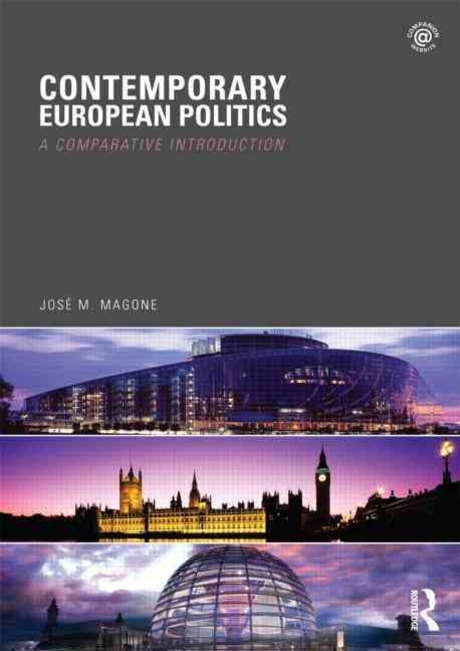
The unification of the European continent since the fall of the Berlin wall in 1989 and the collapse of communist regimes in central and eastern Europe has changed the nature of European politics. This book wants to address the new European politics that emerged out of this coming together of west and east. In the book a pan-European comparative approach is used to analyse the different political systems. Although the focus of the book will be to compare the national political systems across Europe, it also contextualises national politics in the growing importance of European integration.The European Union multi-level governance system approach will be used to show the relationships and interactions between the global, supranational, national, regional and local levels. The book will argue that European politics changed since the 1970s from modern politics, in which the nation-state was still in command of domestic politics and its own borders to post-modern politics in which de-territorialization , de-nationalisation and internationalization processes have changed considerably the nature of national politics of European states.The book includes chapters on the history, theory, institutions, parties and party systems, interest groups, systems of interest intermediation and civil society, the impact of European public policy and the emergence of a European common and foreign policy. This textbook has the general aim of introducing students to the development of the EU's role in world politics. It examines the gradual rise of the EU as an international actor and considers the implications of that role for the EU and for the wider world. It considers some of the main theoretical approaches to foreign policy and stresses the economic importance of the Union.Issues covered include: The EU as an International Actor External Policy-Making The changing state of transatlantic relations and ask whether the EU and US are more friends or rivals? EU's relations with its principal neighbours EU and Russia EU and Asia EU and the Developing World EU and Global Governance EU and Conflict Prevention A European Army? Jos?M. Magoneis Professor in Regional and Global Governance at the Berlin School of Economics. He was previously Reader in European Politics at the University of Hull. Among his publications are Politics of Southern Europe(2003), The Developing Place ofPortugal in the European Union(2004), The New World Architecture(2006) and Contemporary Spanish Politics(Second Edition, 2009) A first rate comprehensive introduction to government and politics in the New Europe, highlighting the interconnectedness of the EU and domestic politics and the transformation from national to multilevel governance.Richard Katz, John Hopkins University, USA A first rate comprehensive introduction to government and politics in the New Europe, highlighting the interconnectedness of the EU and domestic politics and the transformation from national to multilevel governance.Richard Katz, John Hopkins University, USA Ambitious in scope, impressive in its mastery of historical detail and contemporary theory, bold in its methods - and highly readable. Magone's work is destined to become a classic reference for any student of European politics.David HanleyProfessor Emeritus of European Studies, Cardiff University, UK.A sweeping buffet of facts and arguments analyzing change in Europe from the 17 th century to 2009. A useful blend of theory and empirics for those who want an accessible introduction to a diverse region.Nancy Bermeo, University of Oxford, UK A first rate comprehensive introduction to government and politics in the New Europe, highlighting the interconnectedness of the EU and domestic politics and the transformation from national to multilevel governance. - Richard Katz, John Hopkins University, USA Ambitious in scope, impressive in its mastery of historical detail and contemporary theory, bold in its methods - and highly readable. Magone's work is destined to become a classic reference for any student of European politics. - David Hanley, Professor Emeritus of European Studies, Cardiff University, UK. A sweeping buffet of facts and arguments analyzing change in Europe from the 17thcentury to 2009. A useful blend of theory and empirics for those who want an accessible introduction to a diverse region. - Nancy Bermeo, University of Oxford, UK In many books on European politics the subject are countries, i.e. politics in a more or less large number of European countries. With a rare combination of encyclopedic knowledge and analytical skills, this very much welcome book takes Europe back where the action is. The pan-European approach, as Jos?M. Magone labels its comprehensive and careful view of European politics since the fall of the Berlin Wall, provides a really comparative basis for understanding the most recent dynamics of Europe at different levels. The result has crystallized in a book which is an invaluable addition to the literature.- Jos?Ram? Montero, Universidad Aut?oma de Madrid, Spain. A first rate comprehensive introduction to government and politics in the New Europe, highlighting the interconnectedness of the EU and domestic politics and the transformation from national to multilevel governance. Richard Katz, John Hopkins University, USA Ambitious in scope, impressive in its mastery of historical detail and contemporary theory, bold in its methods - and highly readable. Magone "s work is destined to become a classic reference for any student of European politics. David Hanley, Professor Emeritus of European Studies, Cardiff University, UK. A sweeping buffet of facts and arguments analyzing change in Europe from the 17thcentury to 2009. A useful blend of theory and empirics for those who want an accessible introduction to a diverse region. Nancy Bermeo, University of Oxford, UK In many books on European politics the subject are countries, i.e. politics in a more or less large number of European countries. With a rare combination of encyclopedic knowledge and analytical skills, this very much welcome book takes Europe back where the action is. The pan-European approach, as Jos M. Magone labels its comprehensive and careful view of European politics since the fall of the Berlin Wall, provides a really comparative basis for understanding the most recent dynamics of Europe at different levels. The result has crystallized in a book which is an invaluable addition to the literature. Jos Ram n Montero, Universidad Aut noma de Madrid, Spain. A first rate comprehensive introduction to government and politics in the New Europe, highlighting the interconnectedness of the EU and domestic politics and the transformation from national to multilevel governance.Richard Katz, John Hopkins University, USA?mbitious in scope, impressive in its mastery of historical detail and contemporary theory, bold in its methods - and highly readable. Magone's work is destined to become a classic reference for any student of European politics.David Hanley, Professor Emeritus of European Studies, Cardiff University, UK.? sweeping buffet of facts and arguments analyzing change in Europe from the 17 th century to 2009. A useful blend of theory and empirics for those who want an accessible introduction to a diverse region.Nancy Bermeo, University of Oxford, UK?n many books on European politics the subject are countries, i.e. politics in a more or less large number of European countries. With a rare combination of encyclopedic knowledge and analytical skills, this very much welcome book takes Europe back where the action is. The pan-European approach, as Jos?M. Magone labels its comprehensive and careful view of European politics since the fall of the Berlin Wall, provides a really comparative basis for understanding the most recent dynamics of Europe at different levels. The result has crystallized in a book which is an invaluable addition to the literature.?os?Ram? Montero, Universidad Aut?oma de Madrid, Spain. 1. The EU as an International Actor 2.External Policy-Making 3. Transatlantic Relations 4. Enlargement and Foreign Policy 5. Dealing with the Neighbours 6. The EU and Russia 7. Can the Balkans join the EU? 8. The EU and Asia 9. The EU and the Developing World 10. The EU and Global Governance 11. The EU and Conflict Prevention 12. A European Army?