


소개
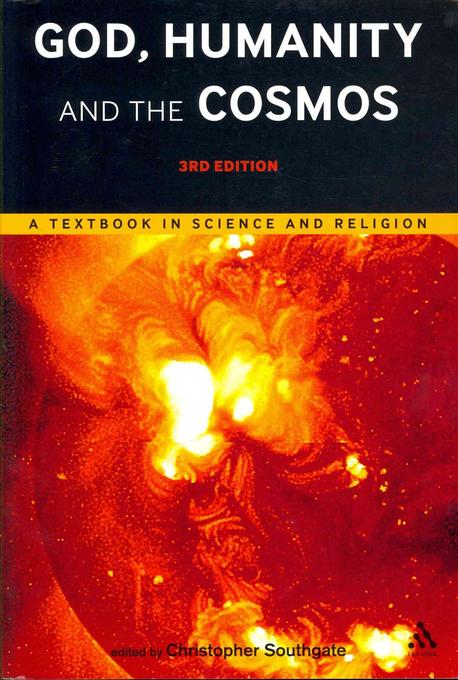
This text provides a systematic exploration of contemporary perspectives in physics, evolutionary biology and psychology as they relate to theological descriptions of the universe, humanity and consciousness. Dr. Christopher Southgate is Lecturer and Director of Modular Studies at the University of Exeter in England. God, Humanity and the Cosmos, first published 1999, revised and expanded edition 2005, remains the only full-length textbook of the science-religion debate. It is divided in five 'books'. The first covers overarching issues in the history of the science-religion interaction, the theology of creation and the philosophy of science. The second looks in depth at the three most prominent areas of interaction - physics, evolutionary biology, and psychology. The third looks at contemporary theological resources for engaging with the science-religion interaction, both within and outside the Christian tradition, and at God's action in the world as a test-case for scientifically-informed theology. The final book considers areas of particular topical concern - how science and religion interact in secondary education, what issues are raised by 'the new atheists', what particular issues are raised by science for Islamic thinking, what challenges are thrown up by the human use of technology, and specifically by climate change. The final, brief 'book' consists of a short set of predictions about the future development of the field. 'A good read and thought provoking on many topics ... A useful survey of many of the key issues in the science-religion debate and good introduction to the literature on the topic.' Meric Srokosz, Science & Christian Belief, 2008 'A valuable book' Peter Ballantine ANVIL Vol. 24 No. 1, 2007 "Bringing together an all-British cast of eight academics with specialties in theology, biochemistry, genetics and science education, Southgate has designed a resource ideal for science-and-religion courses. Several student or reader exercises are spread throughout the text." - Science & Theology News, October 2005 'Distilling the expertise of a dozen key scholars in science and religion and containing significant new material, this third edition of Christopher Southgate's now classic textbook continues to offer a comprehensive overview of what might otherwise seem a hopelessly large and shifting subject. In particular, the contributors are theologically literate and put theology back into the science and religion debate. Students I teach have found this textbook to be the most informative in its field.' - Dr David Grumett, University of Cambridge, UK. 'makes a good read for someone wishing to find a balance between religious teachings and scientific findings' mention - W. Charles Heiser, Theology Digest, Vol. 52, No. 4, Winter 2005 'Not only is God, Humanity and the Cosmos directly addressed to teachers and students, and as such manages to be remarkably accessible; it also carefully addresses all the contemporary issues in the field, but in such a way that it moves the theology and science debate to the cutting edge of the current conversation.' Professor J. Wentzel van Huyssteen, Princeton Theological Seminary Praise for the first edition:'This comprehensive work has the rare virtue of combining readableness with accurate and detailed judgements on the outstanding issues in past and contemporary interactions between science and religion. It is both the book for students we have been waiting for and also a refreshing survey of the field for those currently engaged in it.'-Dr Arthur Peacocke, Ian Ramsey Centre, Oxford 'The first edition of this work was unique, in the science-and-religion field, of being a text eminently suitable both for beginners and for those working at its frontiers. This second edition eminently manifests the same admirable qualities by containing chapters - especially valuable for newcomers -expanding the history of the field and by critically surveying contentious issues which have arisen since the first one - such as the nature of divine action, panentheism, kenosis,and biotechnology. An irreplaceable resource.' 'The invitation of the book to explore the two 'maps' together is one that anyone with integrity in either field should not decline.' Roz Mathews, Themelios, 32/1 'The second edition maintains the five-book organizational structure, with book 1 expanded to include more introductory material related to the science and religion debate. The authors have preserved the suggested discussion exercises and the "note for teachers." The text contains numerous chapter citations for extended treatments of the topics in view, and is replete with notes and references. This book is an important core text for undergraduate or graduate courses in science and religion. Summing Up: Highly recommended. Lower-division undergraduates and up.' J.A. Hewlett, Choice 'This new edition [is] the most broadly-based, maturely considered and lucidly written science-religion overview in the English language. For me, as for Arthur Peacocke, quoted on the cover, it is "an irreplaceable resource".' Neil Spurway, ESSSAT News 16.2 'To write under a title like this, you have to be good! But Christopher Southgate and his team are fully up to the challenge. The first edition of this book was the No 1 volume on my science-&-religion shelves, and this new edition is even better.' 'This includes the most telling analogy I have seen to chronology of earth history: modelling this as a book of 450 pages, the persiod since Abraham would be just the last letter!' 'The volume itself...is exemplary in its awareness of the non-expert in each of its fields. Both scientific and theological terms are meticulously defined - a feature as helpful to the general reader as to the student. There us very lilttle assumption of background knowledge. Managing, nonetheless, to take readers to the forefront of almost every debate is a considerable achievement. I therefore consider this new edition the most broadly-based, maturely considered and lucidly written science-religion overview in the English language. For me, as for Arthur Peacocke, quoted on the cover, it is 'an irreplaceable resource.'' The third edition of a standard textbook in Religion and Science - already a classic!