

소개
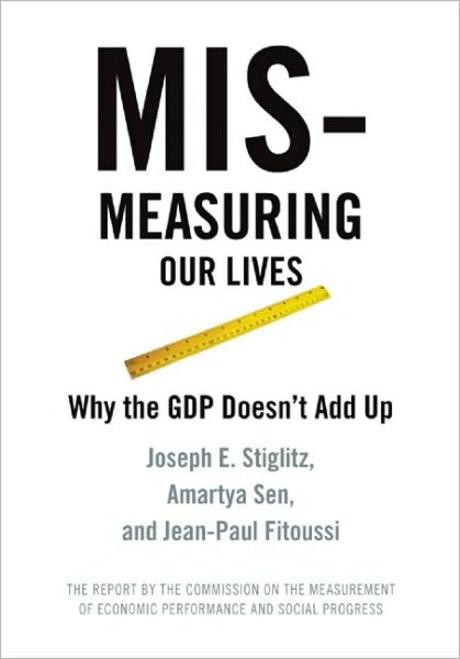
Joseph E. Stiglitz is a professor of economics at Columbia University and the recipient of the John Bates Clark Medal and a Nobel Prize. He is also the former senior vice president and chief economist of the World Bank. His books include Globalization and Its Discontents and The Three Trillion Dollar War. Amartya Sen is Lamont University Professor and Professor of Economics and Philosophy at Harvard University. The author of numerous books, including Identity and Violence and Development as Freedom, he is also the recipient of a Nobel Prize in economics. Jean-Paul Fitoussi is a professor of economics at Sciences Po and the president of OFCE (Sciences Po Center for Economic Research, Paris). President Nicolas Sarkozy of France asked Nobel Prize-winning economists Joseph E. Stiglitz and Amartya Sen, along with the distinguished French economist Jean-Paul Fitoussi, to establish a commission of experts to study whether Gross Domestic Product (GDP)-the most widely used measure of economic activity-is really a reliable indicator of economic and social progress. In February of 2008, amid the looming global financial crisis, President Nicolas Sarkozy of France asked Nobel Prize-winning economists Joseph Stiglitz and Amartya Sen, along with the distinguished French economist Jean Paul Fitoussi, to establish a commission of leading economists to study whether Gross Domestic Product (GDP)--the most widely used measure of economic activity--is a reliable indicator of economic and social progress. The Commission was given the further task of laying out an agenda for developing better measures. Mismeasuring Our Livesis the result of this major intellectual effort, one with pressing relevance for anyone engaged in assessing how and whether our economy is serving the needs of our society. The authors offer a sweeping assessment of the limits of GDP as a measurement of the well-being of societies--considering, for example, how GDP overlooks economic inequality (with the result that most people can be worse off even though average income is increasing); and does not factor environmental impacts into economic decisions. In place of GDP, Mismeasuring Our Livesintroduces a bold new array of concepts, from sustainable measures of economic welfare, to measures of savings and wealth, to a "green GDP." At a time when policymakers worldwide are grappling with unprecedented global financial and environmental issues, here is an essential guide to measuring the things that matter. In February of 2008, amid the looming global financial crisis, President Nicolas Sarkozy of France asked Nobel Prizewinning economists Joseph Stiglitz and Amartya Sen, along with the distinguished French economist Jean Paul Fitoussi, to establish a commission of leading economists to study whether Gross Domestic Product (GDP)the most widely used measure of economic activityis a reliable indicator of economic and social progress. The Commission was given the further task of laying out an agenda for developing better measures. Mismeasuring Our Livesis the result of this major intellectual effort, one with pressing relevance for anyone engaged in assessing how and whether our economy is serving the needs of our society. The authors offer a sweeping assessment of the limits of GDP as a measurement of the well-being of societiesconsidering, for example, how GDP overlooks economic inequality (with the result that most people can be worse off even though average income is increasing); and does not factor environmental impacts into economic decisions. In place of GDP,Mismeasuring Our Livesintroduces a bold new array of concepts, from sustainable measures of economic welfare, to measures of savings and wealth, to a "green GDP." At a time when policymakers worldwide are grappling with unprecedented global financial and environmental issues, here is an essential guide to measuring the things that matter.