

소개
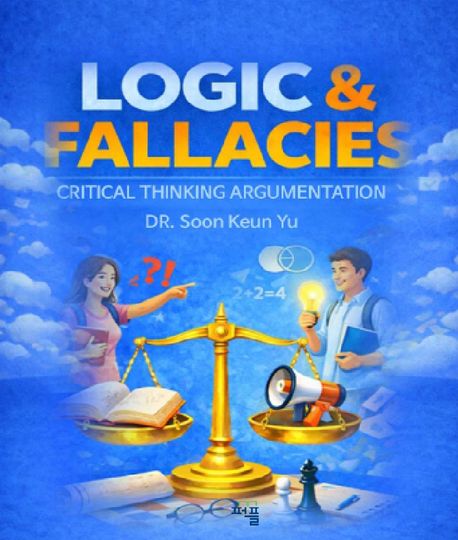
Logic is important because it facilitates effective communication between individuals and serves as a tool for fostering social harmony. The study of logic is essential because it provides the foundation for clear, rational, and disciplined thinking. Logic trains individuals to analyze arguments, distinguish valid reasoning from fallacies, and evaluate evidence objectively rather than emotionally. Through logic, learners develop the ability to identify assumptions, detect inconsistencies, and draw well-supported conclusions. These skills are crucial not only in academic fields such as philosophy, science, law, and mathematics, but also in everyday decision-making, problem solving, and communication. In a world filled with information, persuasion, and conflicting opinions, logic empowers people to think independently, resist manipulation, and make reasoned judgments based on sound principles rather than impulse or bias. Logical expression free from fallacies and a proper understanding of logic help reduce conflict and contradiction, while increasing trust in both the inner and outer worlds. Since logic is the discipline concerned with evaluating arguments and making inferences, understanding logical thinking processes is essential for creating, analyzing, and evaluating diverse claims, ideas, and arguments. 『Logic and Fallacies: Critical Thinking and Argumentation』is a logic textbook that explains logical theory in an accessible manner. Diagrams and examples are used to present logical theories concisely and clearly. Because a mere sequential presentation of logical theory often fails to engage learners and can be difficult to understand, this book employs creative diagrams alongside examples to promote a deeper understanding of logic. This book covers the overall scope of logic for readers and provides practice questions and model answers at the end of each chapter, making it especially helpful for exam preparation and the development of logical thinking skills.